原始数据类型
基本注解
类型注解使用 :TypeAnnotation 语法,如下:
let num: number = 123;
原始类型
TypeScript的原始类型包括: boolean、number、string、void、undefined、null、symbol、bigint
布尔
let flag: boolean = false
数字
let num: number = 123;
字符串
let name: string = 'typescript'
void
表示没有任何类型,当一个函数没有返回值时,其返回值类型是 void:
function sayHello(): void {
    console.log("Hello, TypeScript");
}
函数的返回类型一旦被指定为void,它便不能返回任何类型的值(undefined除外)。
function hello():void{
    return;
}
null 和 undefined
TypeScript 里,undefined 和 null 两者各自有自己的类型分别叫做 undefined 和 null,和 void 相似,它们的本身的类型用处不是很大:
默认情况下 null 和 undefined 是所有类型的子类型,就是说你可以把 null 和 undefined 赋值给 number 类型的变量。
let num1: number = 1
let num2: number = 2

num1 = undefined // if strictNullChecks disabled.
num2 = null // if strictNullChecks disabled.
let u: undefined = undefined;
let n: null = null;
let v: void

v = undefined
v = null // if strictNullChecks disabled.
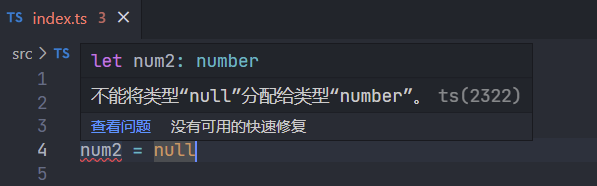
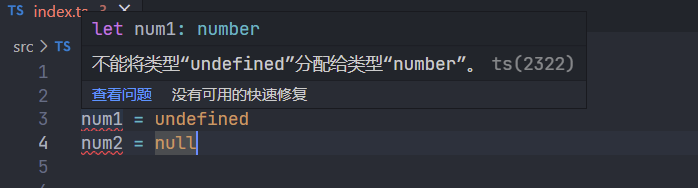
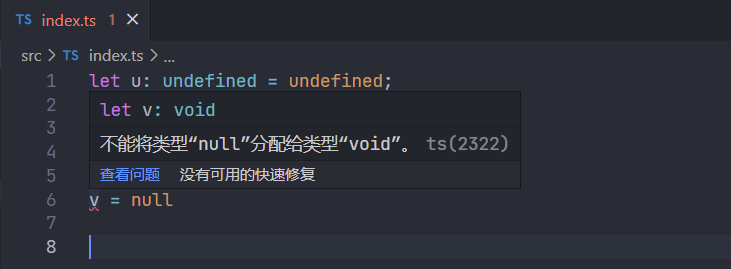
但是在正式项目中一般都是开启 strictNullChecks 检测的模式,即 null 只能赋值给它自己,undefined 可以赋值给它自己和 void,这样可以规避非常多的问题。
否则就会进行报错提示
symbol
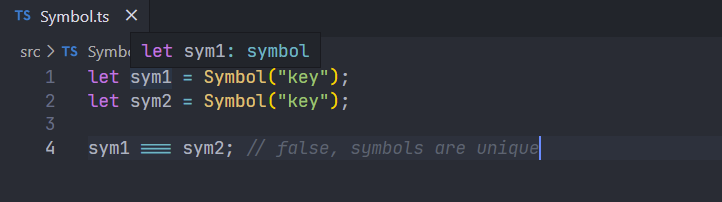
Symbol 是在ES2015之后成为新的原始类型,它通过 Symbol 构造函数创建:
let sym1 = Symbol("key");
let sym2 = Symbol("key");

sym1 === sym2; // false, symbols are unique
bigint
BigInt 是一种内置对象,它提供了一种方法来表示大于 2^53 - 1 的整数。这原本是 Javascript中可以用 Number 表示的最大数字。BigInt 可以表示任意大的整数。
使用 BigInt 可以安全地存储和操作大整数,即使这个数已经超出了JavaScript构造函数 Number 能够表示的安全整数范围。
Number.MAX_SAFE_INTEGER 给出了可以安全递增的最大可能整数,如下:
const max = Number.MAX_SAFE_INTEGER;
const max1 = max + 1
const max2 = max + 2

max1 === max2 //true
max1 与 max2 居然相等,这就是超过精度范围造成的问题,而 BigInt 正是解决这类问题而生的:
可以用在一个整数字面量后面加 n 的方式定义一个 BigInt ,如:10n,或者调用函数BigInt()。
const max = BigInt(Number.MAX_SAFE_INTEGER);
const max1 = max + 1n
const max2 = max + 2n
max1 === max2 // false
number 类型虽然和 BigInt 都是有表示数字的意思,但是实际上两者类型是不同的:
declare let foo: number;
declare let bar: bigint;

foo = bar; // error: Type 'bigint' is not assignable to type 'number'.
bar = foo; // error: Type 'number' is not assignable to type 'bigint'.